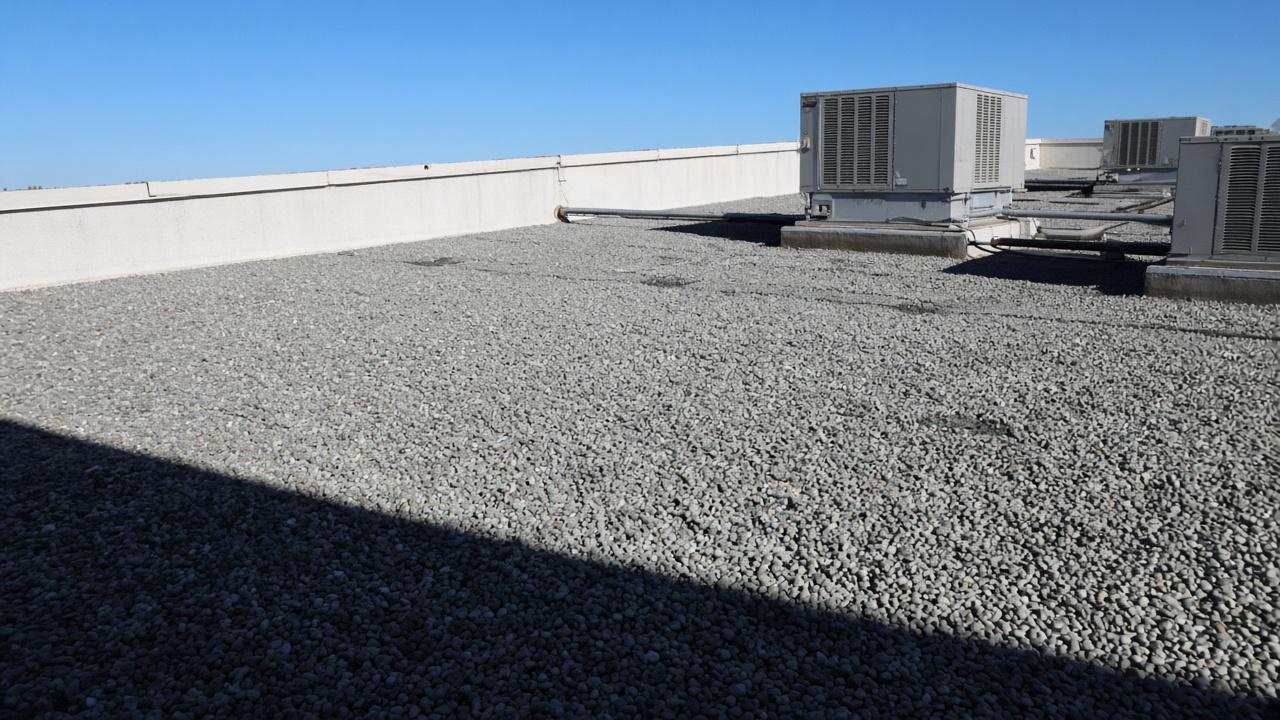
Built-Up Roofing Systems in Gilbert, AZ
Built-up roofing has been trusted on commercial buildings since the 1800s. Multiple redundant plies of felt and bitumen create a robust membrane that holds up well in Arizona's demanding climate.
Built-Up Roofing (BUR) in Gilbert, AZ
Built-up roofing is the original commercial roofing system, with a track record going back to the 1800s. A BUR system consists of multiple plies of bitumen- saturated felt or fiberglass reinforcement mat, alternating with layers of hot asphalt or cold-applied bitumen, topped with a mineral-surfaced cap sheet or flood coat and gravel. The redundancy of multiple plies makes BUR one of the most durable roofing assemblies available.
BUR System Components
Base Sheet
The base sheet is mechanically attached to the deck or adhered to insulation, providing the first waterproofing layer and a stable substrate for subsequent plies. Heavy-duty fibreglass-reinforced base sheets provide dimensional stability and resistance to thermal cracking.
Ply Sheets
Multiple plies of felt or fibreglass mat are embedded in hot-mopped asphalt. A three-ply system is standard. A four-ply system provides additional redundancy and is used on large roofs or high-value buildings. Each ply is offset from the previous one — if a pinhole develops in one ply, the next ply under it is displaced enough to block water passage.
Cap Sheet or Flood Coat
The system is topped either with a mineral-surfaced modified bitumen cap sheet or with a flood coat of hot asphalt and aggregate (gravel or slag). The mineral surface or aggregate protects the bitumen from UV degradation and provides significant fire resistance. White-granule cap sheets improve solar reflectance.
BUR Performance in Arizona
Arizona heat is one of BUR's main challenges. Hot asphalt requires careful temperature management during application — asphalt that's too hot or that loses too much heat before application creates an incomplete bond. Experienced BUR applicators know how to manage interply temperatures in summer heat.
Gravel-ballasted BUR has a significant advantage in Arizona: the gravel protects the bitumen from UV and reduces thermal cycling at the membrane surface. The surface temperature of a gravel BUR roof stays cooler than a bare membrane because the gravel shades the bitumen. This is one reason many older BUR roofs in the Valley have outlasted newer single-ply systems installed at the same time.
BUR Repair and Maintenance
BUR is very repairable. Small blisters can be cut, dried, and re-bonded. Failed sections can be patched with modified bitumen cap sheet or new BUR plies. The multiple-ply structure means that isolated failures rarely cause immediate leaks — giving you time to plan and execute repairs properly.
Frequently Asked Questions
Is BUR still a good choice for new commercial roofs?
Yes, particularly for large industrial buildings, buildings with heavy foot traffic, or owners who value the redundancy of a multi-ply system. BUR has a higher upfront cost than single-ply but excellent long-term performance.
How long does a BUR roof last?
Well-installed BUR systems in Arizona regularly achieve 20–30 years. Gravel-ballasted systems often exceed 30 years because the aggregate protects the bitumen from UV. Regular maintenance — keeping drains clear and addressing any blisters early — is key.
Can you repair BUR without replacing the whole roof?
Usually yes. BUR's multi-ply structure means you can remove and replace damaged sections without disturbing the surrounding membrane. We assess each roof individually, but most BUR repairs are localised and cost-effective.
Related Services
Modified Bitumen Roofing
Modified bitumen is a proven system that's been protecting commercial buildings for over 40 years. The granulated surface handles Arizona UV and the polymer-modified base stays flexible even when temps swing hard.
Roof Coating & Restoration
A quality coating system can add 10–15 years to a commercial roof that still has structural integrity. It's often one-third the cost of a full replacement and keeps tons of material out of the landfill.
Commercial Roof Inspection
You can't manage what you can't see. A thorough roof inspection gives you a clear picture of what's happening up there — before a leak shows up on the inside.
Need Built-Up Roofing in Gilbert?
800+ commercial roofing projects completed across the East Valley. Get your free estimate today.