Commercial PVC Roofing in Gilbert, AZ
PVC is the go-to for buildings that deal with cooking grease, chemical fumes, or aggressive drainage. The welded seams and chemical resistance make it one of the most durable single-ply options available.
PVC Roofing for Commercial Buildings in Gilbert, AZ
Polyvinyl Chloride (PVC) roofing is a thermoplastic single-ply membrane with one key characteristic that sets it apart from other membrane systems: chemical resistance. PVC membranes resist degradation from grease, animal fats, vegetable oils, and many industrial chemicals. This makes PVC the recommended choice for restaurants, food processing facilities, commercial kitchens, and industrial buildings where exhaust or drainage could contact the roof membrane.
PVC vs TPO — Which Is Right for Your Building?
Both PVC and TPO are white thermoplastic membranes that can be heat-welded. From the outside they look nearly identical. The key differences:
- Chemical resistance: PVC wins here. If your building exhausts grease or chemicals, PVC is the specification.
- Cost: PVC is generally 15–25% more expensive than comparable TPO.
- Cold flexibility: TPO maintains better flexibility in cold weather. In Arizona this is rarely a factor.
- Heat-age resistance: Modern TPO has improved significantly. PVC can become brittle over decades in extreme heat.
- Recyclability: TPO is generally considered more environmentally friendly at end of life.
PVC Seam Welding
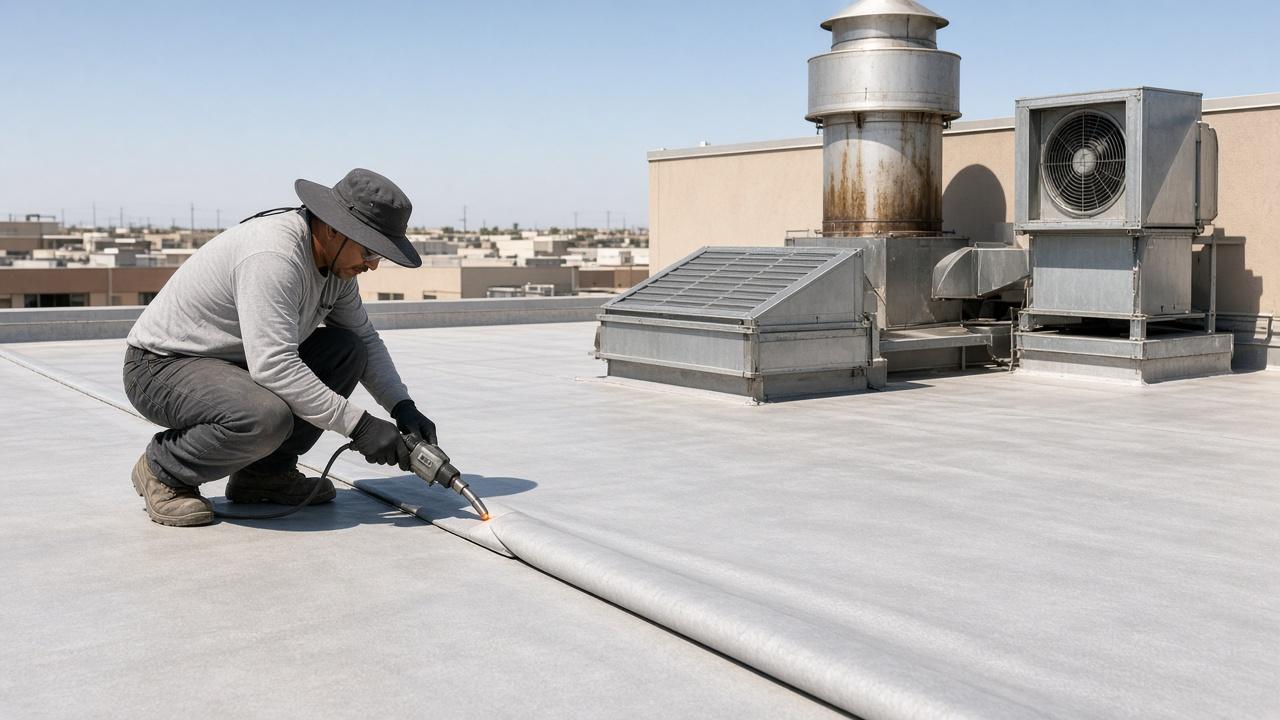
Like TPO, PVC seams are heat-welded using a hot-air welder. The weld fuses the two membrane surfaces together into a single homogenous bond. Properly welded PVC seams are stronger than the membrane itself. Every seam is probe-tested after welding — a steel probe is dragged along the seam edge with pressure. If the seam is sound, the probe skips off. If there's an unwelded section, the probe catches it.
PVC Flashing Details
PVC flashings are field-fabricated or pre-fabricated from PVC membrane material and welded to the field membrane. This creates a continuous, welded waterproofing system at every penetration, curb, and wall termination — no caulk joints that can shrink and crack over time. When properly detailed, PVC provides some of the most durable flashing performance of any commercial roofing system.
Frequently Asked Questions
Why is PVC recommended for restaurants?
Grease and animal fats that come from kitchen exhaust contact the roof membrane around exhaust fans. These oils degrade most membrane systems over time. PVC is formulated to resist this degradation. For any building with cooking grease exhaust, PVC is the correct specification.
How long does PVC roofing last?
Quality PVC systems typically last 20–30 years. In extreme-heat climates, PVC can become brittle over time as plasticisers migrate out of the membrane. Choosing a high-quality PVC membrane with UV stabilisers extends service life.
Can you install PVC over an existing roof?
Yes, in some cases. If the existing substrate is dry, structurally sound, and compatible with the PVC adhesive or fastening system, a recover is possible. We assess each situation individually.
Related Services
TPO Roofing
TPO is one of the most popular commercial roofing systems in the Valley for good reason — it reflects heat, welds tight, and holds up against UV better than most options.
EPDM Roofing
EPDM has been a workhorse of commercial roofing for decades. It's flexible, resistant to extreme temps, and when installed correctly it lasts 25+ years with minimal maintenance.
Commercial Roof Inspection
You can't manage what you can't see. A thorough roof inspection gives you a clear picture of what's happening up there — before a leak shows up on the inside.
Need PVC Roofing in Gilbert?
800+ commercial roofing projects completed across the East Valley. Get your free estimate today.