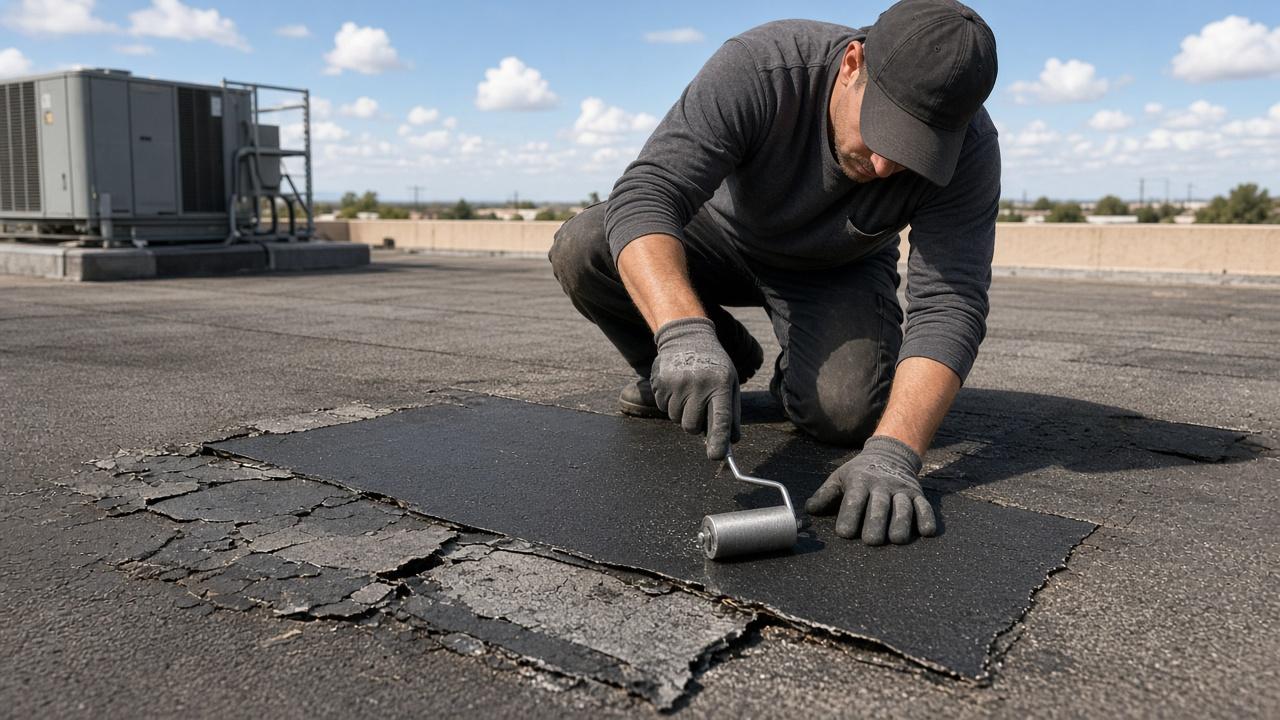
Commercial Flat Roof Repair in Gilbert, AZ
Flat roofs take a beating in Arizona — heat cycles, UV, and monsoon rains all push them to the limit. We find the problem fast and fix it right.
Commercial Flat Roof Repair in Gilbert, AZ
Flat roofs on commercial buildings in the East Valley face a unique set of stressors. Summer temperatures regularly exceed 110°F, UV intensity here is among the highest in the country, and the monsoon season delivers sudden heavy rain after months of bone-dry heat. That combination accelerates membrane degradation faster than almost any climate in the US.
When something fails — a seam opens, flashing pulls away from a parapet, a drain gets blocked and water ponds — the damage compounds quickly. Water that sits on a flat roof for 48 hours begins saturating insulation. Once insulation is wet, it doesn't dry out. It has to be removed and replaced, which turns a minor seam repair into a significant project.
Common Flat Roof Failures We Fix
Open Membrane Seams
Heat-welded or adhered seams are the most common failure point on TPO, EPDM, and PVC membranes. Arizona's thermal cycling — surfaces hitting 170°F in summer and dropping to near freezing on winter nights — constantly stresses these seams. Over time they open. We re-weld or re-bond seams using manufacturer-specified methods and materials, not just caulk.
Failed Flashing
Flashing at parapet walls, HVAC curbs, skylights, and pipe penetrations is where most commercial roof leaks originate. The flashing membrane is thinner, it terminates at a metal edge or termination bar, and any movement in the building or substrate pulls it loose. We remove failed flashing, clean the substrate, and install new flashing with proper detailing and sealing.
Ponding Water
ASTM defines ponding water as water that remains on a roof 48 hours after rainfall. It's a code issue and a practical one — ponding accelerates membrane degradation, adds dead load to the structure, and attracts algae and debris. We diagnose drainage problems and fix them: clearing blocked drains, adding tapered insulation to create positive slope, or installing additional drains.
Blistering and Alligatoring
Blisters form when moisture or air is trapped between membrane layers during installation or enters through small punctures. Alligatoring — the scaly, cracked pattern on aged built-up roofing — means the bituminous binder has oxidised through. Both indicate the membrane has lost its waterproofing integrity in that zone and needs to be addressed before it becomes a full leak.
Punctures and Impact Damage
HVAC technicians, other tradespeople, and foot traffic all create punctures on flat commercial roofs. A quarter-inch hole in a membrane is invisible until it causes a water stain on the ceiling below. We locate punctures — including using electronic leak detection on occupied buildings where we can't flood-test — and repair them properly.
Our Flat Roof Repair Process
We don't guess. Every flat roof repair starts with a thorough inspection: walking the full membrane, checking every seam, penetration, and flashing termination, photographing problem areas, and checking inside where water has shown up to correlate with the exterior. You get a written report with photos before we propose any work.
Repairs use manufacturer-approved materials and methods. On TPO and PVC roofs, seam repairs are heat-welded, not taped. On modified bitumen, patches are torch-applied or cold-applied depending on the base system. We don't use products that conflict with existing warranties.
When to Repair vs. Replace
Not every flat roof problem warrants a full replacement. A roof with isolated failures, less than 25% wet insulation, and a membrane that still has flexibility is usually a repair candidate. A roof that's saturated across more than a third of its area, has extensive alligatoring, or has been patched repeatedly in the same areas is telling you it's done. We'll give you an honest assessment of which situation you're in.
Frequently Asked Questions
How do you find a leak on a flat commercial roof?
We start inside, noting where water is coming in, then walk the roof looking for obvious failures — open seams, pulled flashing, pooling. For leaks that aren't obvious, we use electronic leak detection equipment that can locate a membrane breach within inches without damaging the roof.
Can you repair a flat roof while the building is occupied?
Yes. Most flat roof repairs don't require building evacuation. We coordinate with you on access and keep fumes, noise, and debris away from occupied areas. TPO seam welding produces minimal odour. Torch-applied work on occupied buildings requires ventilation coordination.
How long does a flat roof repair last?
A properly executed repair using the right materials should last as long as the surrounding membrane — often 10+ years. Quick fixes using incompatible materials or improper technique fail in 1-2 seasons. That's why we use manufacturer-specified methods.
Related Services
Commercial Roof Inspection
You can't manage what you can't see. A thorough roof inspection gives you a clear picture of what's happening up there — before a leak shows up on the inside.
Roof Leak Repair
A leak on a commercial roof isn't just a roofing problem — it's a business disruption. We respond fast, find the actual source (not just where the water shows up inside), and fix it.
TPO Roofing
TPO is one of the most popular commercial roofing systems in the Valley for good reason — it reflects heat, welds tight, and holds up against UV better than most options.
Need Flat Roof Repair in Gilbert?
800+ commercial roofing projects completed across the East Valley. Get your free estimate today.